

Review: NiSi 16mm f/2.8 ASPH for Hasselblad – Real-World Test


One of the biggest hurdles for most people getting into medium format is the limited selection of lenses that can cover the needs of a modern photographer. In recent years, medium format brands have released several very capable zoom lenses, making these systems much more practical and bringing them closer to full-frame cameras, which most photographers still rely on. Even so, a few specialized lenses were still missing from the medium format lineup—lenses that would cover what I need as a landscape photographer. One of them was an ultra-wide lens around 12mm in full-frame terms. Until now.
NiSi recently released a 16mm lens, which gives you roughly the same field of view as a 12.6mm full-frame lens. As soon as I heard it was available, I knew I had to try it. I’d recently made the move to medium format myself, so I took the lens with me to Iceland. Anyone familiar with my photography knows I’m not one to baby my gear. I take it into some pretty harsh conditions, and this NiSi lens was no exception.
So how did it hold up in Iceland? Is the image quality good enough for the 100-megapixel cameras this lens was designed for? I won’t be focusing too much on charts and numbers in this review. Instead, I’ll show you what it’s like to use the lens in the field, along with the results—and the reality. Enjoy reading.
Who Is the NiSi 16mm f/2.8 ASPH For?
Given its focal length, it’s clear this lens is aimed mainly at landscape and architecture photographers using a Hasselblad X or Fujifilm GFX medium format system. One feature that should appeal to astrophotographers, too, is its fast f/2.8 maximum aperture, which should make it a great choice for shooting the night sky.
Design, Build Quality, and Handling
At first glance, the NiSi 16mm f/2.8 ASPH looks very straightforward. Its black finish with yellow accents is typical of NiSi, and the all-metal construction feels high quality, fitting right in with the premium feel of a Hasselblad or Fujifilm GFX camera. Mounted on a Hasselblad, it doesn’t look out of place the way some third-party lenses can. It’s true that the NiSi looks a little more complex than Hasselblad’s native XCD lenses, but it still feels premium and doesn’t take away from the camera’s overall look and feel. It’s not the lightest lens, either. At 835 grams, you can definitely feel its weight in your hand. But given what it offers, that weight is understandable.

The lens has two control rings. The one closest to the camera body is used to adjust the aperture, while the ring at the front is for manual focusing, just as you’d expect on a regular lens. There’s no AF/MF switch because this lens supports manual focus only. From my point of view, that’s a bit of a drawback, since it means you can’t use automatic focus stacking. Still, it’s not a major issue. Given how closed the Hasselblad system is, making a fully compatible autofocus lens would have been practically impossible at this point.
The focus ring turns smoothly and has just the right amount of resistance. One thing I really like is that it has a physical stop at both ends of its focus range, so you can’t keep turning it endlessly. That’s especially useful when manually focus stacking in the dark: you can move between focus points without having to keep checking the camera screen to see what’s in focus.
The aperture ring is also easy and pleasant to use. There’s a clearly defined click at each aperture setting, so you can feel when the ring has settled into place and know you haven’t accidentally stopped between settings. Both the aperture and focus rings are large enough to operate comfortably, even when you’re wearing gloves.
Another feature that will be especially welcome for landscape photographers is the ability to use magnetic filters with the lens. NiSi’s native JetMag Pro system attaches quickly and easily, taking about a second to put on. I was able to do it just as quickly while wearing winter gloves, which is a real advantage when you’re out shooting in cold conditions.
Compatibility with the Hasselblad X System
Hasselblad is generally a more closed system, and that’s understandable. It’s also part of what gives the brand its luxury appeal. But it does raise the question of how well third-party lenses, such as the NiSi 16mm f/2.8 ASPH, work with the system. Of course, the compatibility isn’t perfect. Still, the lens makes full use of the image quality Hasselblad cameras can deliver, and that’s what matters most.

How well does the lens communicate with the X2D II? Overall, very well. To get it working as intended, though, I had to change a few settings in the camera first. For starters, you need to use the electronic shutter with the NiSi. The Hasselblad X2D II doesn’t have a built-in shutter; with native lenses, it uses a leaf shutter built into the lens instead. The NiSi 16mm f/2.8 ASPH doesn’t have a leaf shutter, so you’ll need to switch to the electronic shutter. That’s no complication, though. It doesn’t affect image quality or anything like that, especially when shooting landscapes and architecture.
Stabilization is another important consideration. Hasselblad cameras are known for their excellent in-body image stabilization. With native lenses, I can handhold exposures of up to three seconds, which is pretty remarkable. So how does stabilization work with the NiSi? It depends on choosing the right setting in the menu. I tried a few different options, and the “Sport” stabilization mode worked best. You’ll also need to set the stabilization focal length to 16mm. Fortunately, you only have to do this once—the camera will switch to that setting automatically whenever you mount the NiSi. With this setup, I could easily handhold exposures of up to one second using the electronic shutter, which is more than enough for photographing waterfalls and flowing water without a tripod.
You might also be wondering how focus peaking works with this lens. Focus peaking highlights the areas that are currently in focus with a colored overlay. I’m happy to say it works really well: the highlight is easy to see and very accurate.
The only thing that took me a little while to get used to is that the camera doesn’t receive information about the selected aperture. That information won’t appear in the image file’s EXIF data, either, which could be an issue for some photographers. It doesn’t bother me much, since it doesn’t make the lens any harder to use, but it’s worth mentioning.
What’s It Like to Use the Lens in the Field?
That’s an important question we often forget to ask when choosing a lens. It’s one of the reasons I took this lens to Iceland: the wild conditions up north put your gear to the test like few places can.
First, I want to talk about its weather sealing. Of course, no manufacturer is going to recommend using camera gear in the rain—let alone beside a rough sea with salt spray flying everywhere. I put the lens through both, and I didn’t just give it a quick splash test. I really put it to work. I shot with it in the rain in the Icelandic interior. After a few hours, it was so wet that it was hard to wipe down properly. The cloth was soaked, too. And yet the lens kept working.
Some lenses start to fog up inside after just a few minutes in the rain, which means you’re done shooting for at least the next few hours. That never happened with the NiSi—not while I was shooting or afterward, despite the sharp temperature changes and the constantly damp conditions. To me, that’s a clear sign that NiSi takes weather sealing seriously.

Hasselblad X2DII + NiSi 16mm f/2.8 ASPH (ISO 100, f/11, 1/6s Handheld)
The biggest challenge, though, was salt water. Maybe you know the feeling: you’re standing by the ocean in strong winds, waves crashing against the rocks around you, so focused on the dramatic conditions that you miss one coming your way. It breaks against the rock you’re standing on and drenches you and your camera in salt water. This happens to landscape photographers, so we need gear that can handle it. The same thing happened while I was testing the NiSi in Iceland. I wiped it down thoroughly about 30 minutes later, but the salt water hadn’t damaged it, which pleasantly surprised me. The weather sealing did its job. Of course, always be careful—salt water can permanently damage your gear. I’m sharing this to say you can take your medium format camera and NiSi 16mm out in tougher conditions.
Another challenge in landscape photography is focus stacking. Modern cameras usually offer automatic focus bracketing, but you can’t use it with the NiSi because it’s fully manual. As I mentioned, though, focusing is very precise, and the lens works well for focus stacking thanks to the hard stops at both ends of the focus range.
That brings me to another important spec—and a deciding factor for me when choosing a wide-angle lens: minimum focusing distance. I often use small objects as prominent foreground elements, moving in close to make them look larger. So the closer a lens can focus, the better. The NiSi’s official minimum focusing distance is 25cm, but in practice it’s even better. I got sharp results at around 20–21cm, which is a big plus. It lets foreground objects stand out more and makes for more interesting compositions.

NiSi 16mm f/2.8 ASPH (ISO 100, f/11, 1/4s Handheld)
Image Quality
Now we get to the most important part: image quality. I still remember the first time I looked through and zoomed in on files from a 100MP medium format Hasselblad. I couldn’t believe the difference compared with the full-frame cameras I’d been using. Of course, full-frame resolution is more than enough for most people. But medium format files are a joy to look at. Can the NiSi 16mm f/2.8 ASPH hold its own against Hasselblad’s top-of-the-line native XCD lenses? Does it deliver that same medium format experience? I tried it in a range of situations, and the answer depends on a few different factors.
Lens Sharpness
The first thing to get right is the stabilization setting. Hasselblad says that stabilization works just as well with third-party lenses, but it doesn’t happen automatically. During my first few shoots, including while photographing the Northern Lights, I made the mistake of leaving stabilization on “Normal.” I later realized that almost all my shots were blurry—even at 1/20 sec. With native Hasselblad lenses, I can handhold exposures of up to three seconds. A few days later, I figured out that I needed to switch stabilization to “Sport.” Only then did it start working properly and deliver results similar to those I get with native lenses. This made a big difference to image quality.
Now let’s look at sharpness in normal conditions, with stabilization set correctly. I compared the NiSi with the razor-sharp native XCD 20-35, and the NiSi really surprised me. At f/5.6 and higher, it’s just as sharp as the XCD 20-35—at times, it even looks sharper. That’s an incredible result. And I’m not talking just about the center of the image, but the corners, too. Even at this extremely wide focal length, the NiSi is razor-sharp in the corners. See for yourself.

NiSi 16mm (ISO 100, f/11, 1/4s Handheld)

Hasselblad XCD 20-35 (ISO 100, f/11, 1/6s Handheld)

NiSi 16mm (100% Crop - center)

Hasselblad XCD 20-35 (100% Crop - center)

NiSi 16mm (100% Crop - corner)

Hasselblad XCD 20-35 (100% Crop - corner)
The difference between these lenses is most noticeable at wider apertures. Medium format cameras generally have a shallower depth of field at wider apertures, and at f/2.8, Hasselblad’s native lenses are a little sharper. I compared the NiSi with the XCD 25V, a lens designed primarily for astrophotography. But we’re talking about viewing images at 100%. You’d be hard-pressed to spot the difference in a real print, even a large one. Price is another factor: the NiSi costs around €1,300, while the lenses we’re comparing it to cost €5,000 or more. At that price, the NiSi’s sharpness and overall image quality are remarkable, and more than good enough for professional landscape photography, including shots of the Milky Way and the Northern Lights.
Distortion
Another thing to consider when it comes to image quality is distortion. With an ultra-wide lens that offers a 12.6mm full-frame equivalent field of view, some distortion is to be expected. Personally, I like the distortion you get with lenses like this. It helps emphasize interesting foreground subjects by stretching them slightly. Over the years, I’ve tried a range of wide-angle lenses with different levels of distortion in the corners. I’d say the NiSi 16mm f/2.8 ASPH has very subtle distortion. Don’t expect dramatic bending at the edges—just a slight stretch that feels natural for such a wide lens. That also makes it a good option for architecture photographers. I’m curious to see whether NiSi will eventually create a lens profile that Adobe software can use to automatically correct distortion. For now, Adobe software doesn’t recognize the lens, and, as with the aperture, the lens information in the EXIF data simply shows as “unknown.”
Chromatic Aberration
What about chromatic aberration? This was what worried me most at first. Many medium format lenses have strong chromatic aberration, especially in the corners. Sometimes it feels like you’re shooting in some strange mode that requires old-school red-and-blue 3D glasses. That’s not an issue with the NiSi, though. This lens produces virtually no chromatic aberration, even in the corners. I don’t know how NiSi’s engineers managed it, but hats off to them. Chromatic aberration isn’t a huge problem in itself—you can remove it in just a few clicks in Photoshop or Lightroom. Still, it’s much better not to have to think about it or spend time fixing it in post.
Sunstars and Lens Flare
Landscape photographers will also want to know how the lens performs when shooting into the light, especially how it handles flare and the quality of the sunstars it produces. When shooting directly into the sun, the lens creates quite a lot of flare, even at f/8, as you can see in the photo below. Unfortunately, many wide-angle lenses have the same issue, and this one is no exception. If you want to get rid of the flare completely, I recommend taking another shot of the same composition with your finger covering the sun, then blending the two images. This technique is called “flare blending” and was developed specifically to eliminate this kind of flare. It’s not that the lens is particularly bad in this regard; it’s simply a characteristic of most wide-angle lenses.

NiSi 16mm f/2.8 ASPH (ISO 100, 1/350s, f/16)
On the other hand, the NiSi produces a really nice, natural-looking sunstar even at wider apertures. When shooting into the light, the star starts to appear at f/5.6, which is unusual for a lens of this type. So if you like sunstars, this lens should make you happy.
Night Photography
Now let’s look at something that will interest astrophotographers and anyone who enjoys shooting night landscapes: how the lens handles stars and the Northern Lights. As I mentioned earlier, the NiSi is slightly less sharp at f/2.8 than its direct native competitor, the Hasselblad XCD 25V. You can see the difference in night shots, but only when zoomed in extremely far. In real-world use, you’ll hardly notice it. The difference often comes down to the electronic shutter, which is more prone to motion blur. If you set the camera’s two-second timer—which is a good idea with any camera when shooting at night—you don’t need to worry about camera shake.
To be sure, I tried every stabilization setting available for night photography, including turning stabilization off completely. On a tripod, it made practically no difference. The “Sport” setting still gave me the best results, so I kept using it at night, too.
In the comparison below, you can see that there’s practically no difference between the photos apart from the focal length—not even at 100%. A slight difference in sharpness only shows up when you zoom in extremely far on the edge of the hill. I took these photos back home in Slovakia, since I only managed to capture a clear starry sky on one night in Iceland, when the Northern Lights danced across the sky.

NiSi 16mm (ISO 6400, 11s, f/2.8)

Hasselblad XCD 25v (ISO 6400, 11s, f/2.8)

NiSi 16mm (100% Crop - center) No Denoise
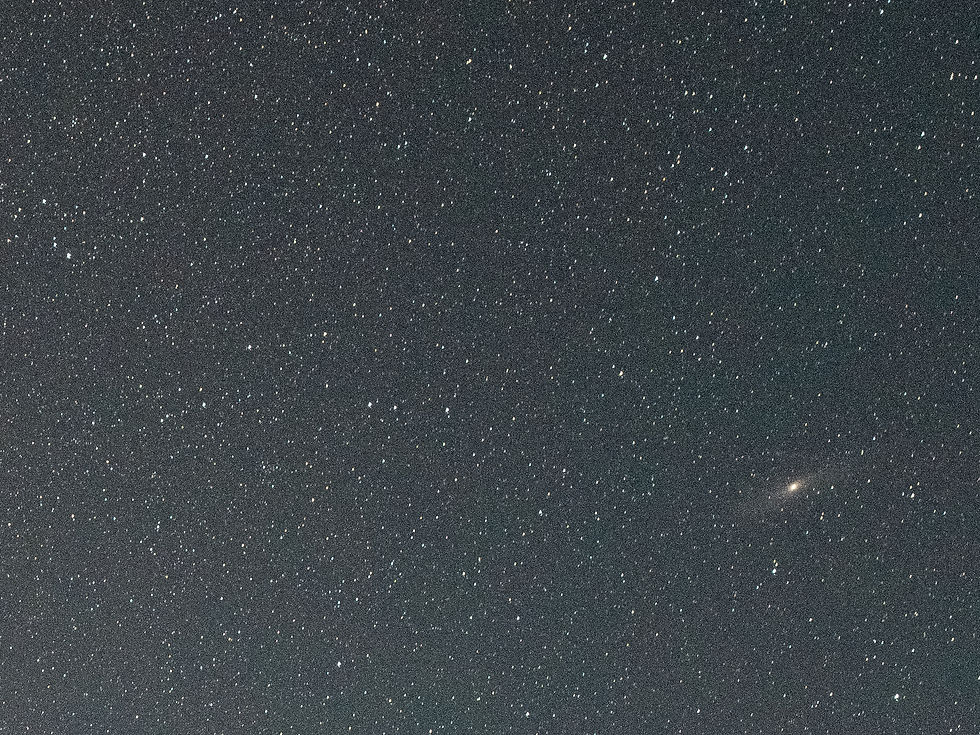
Hasselblad XCD 25v (100% Crop - center) No Denoise

NiSi 16mm (100% Crop - corner) No Denoise

Hasselblad XCD 25v (100% Crop - corner) No Denoise
The lens performed similarly when I photographed the Northern Lights. Again, you can see a slight difference in sharpness along the edges of the hills, but it’s negligible. For a lens at this price point, the results are exceptionally good.
Where the NiSi 16mm f/2.8 ASPH really has the advantage is its focal length. Night photography often calls for a wider field of view, especially when you’re shooting a night landscape and want to fit in a strong foreground, a prominent mountain, and the Milky Way above it. A 25mm lens (20mm full-frame equivalent) often just isn’t wide enough for that. That’s why the NiSi is going to be a regular companion on my trips.

NiSi 16mm f/2.8 ASPH (ISO 6400, f/2.8, 6s)
Is the NiSi 16mm f/2.8 ASPH Worth It?
After several days of shooting in Iceland’s challenging conditions, I can say the NiSi 16mm f/2.8 ASPH pleasantly surprised me. Honestly, I was a little skeptical before testing it. After all, this is a third-party lens expected to resolve a 100-megapixel medium format sensor, and it costs considerably less than Hasselblad’s native lenses. The results, though, were much better than I expected.
The biggest strength for me is the combination of an extremely wide field of view and excellent image quality. At smaller apertures, the lens is sharp from the center right into the corners and has no trouble making the most of the 100MP sensor. It also handles chromatic aberration very well, has surprisingly subtle distortion, and its close focusing distance makes it easy to create the strong foreground compositions I love. Add the f/2.8 aperture, and you have a lens that’s also very capable for night landscapes and astrophotography.
It’s not perfect, of course. You’ll need to get used to manual focus and the electronic shutter, and there’s no aperture information in the EXIF data. You’ll also see noticeable flare when shooting directly into the sun. But these are all things you can work around without too much trouble in the field. What matters more to me is that the lens delivered where it counts: image quality, handling, and reliability in the field. Rain, moisture, and even that unpleasant encounter with salt water didn’t cause any problems during my test.

NiSi 16mm f/2.8 ASPH (ISO 100, f/16, 1/350s)
And that’s probably the best way to sum up this review. The NiSi 16mm f/2.8 ASPH isn’t a lens every medium format owner will own. It’s a pretty specialized piece of gear. But if you shoot landscapes, architecture, or the night sky and want a truly ultra-wide lens for your Hasselblad or Fujifilm GFX, it’s a very compelling option.
I was looking for exactly this kind of lens. I wanted a wide-angle that would let me get closer to the foreground, capture more dramatic perspectives, and still deliver the image quality that made me switch to medium format in the first place. The NiSi 16mm f/2.8 ASPH does all of that. That’s why it’s staying in my camera bag, even after I’ve finished writing this review.


Comments